Explainer
2026
Keeping Content Flexible with Dynamic VFX
Building a postproduction workflow that empowers a client to handle inevitable content edits with ease
Client:
Large-Cap Pharma
Audience × Intent
Our audience was patients and/or caregivers looking to learn about CIDP and possible treatment options. Our intent was to build a postproduction workflow that empowers the client to handle inevitable content edits with ease.
About the Project
If you've ever worked in pharma marketing, you're likely familiar with how important it is that copy and content is up-to-date and accurate. Everything down to the alt text of images is reviewed, checked, reviewed again, and so on.
Changes after regulatory review are extremely common so when an agency that I was working with set out to produce this 30-minute promotional explainer program for their client, they needed the content to be as flexible as possible should anything need to be updated once filming was complete.
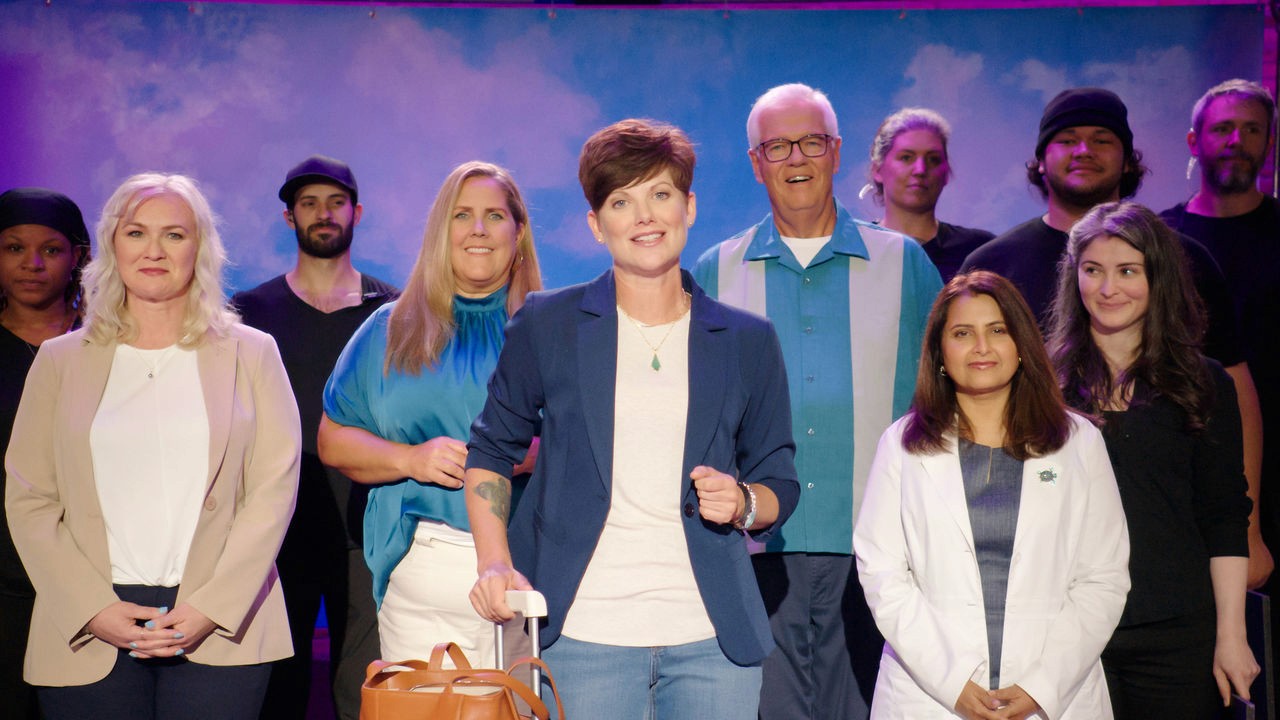
The concept was built around a genuine patient spokesperson (not an actor) sharing her story and inviting the audience to follow along as she shares info and discusses her experiences with other characters that played a part in her own journey.
The creative direction for the production was a fourth-wall-breaking approach to a Mr. Rogers-style set and presentation where the host speaks to the audience and stagehands periodically come and go to transition sets and provide additional info with cards, dry erase boards, and other mobile set pieces.
In order to maintain full flexibility, all of the cards and boards were totally blank. Most didn't even have tracking markers. The content was to be added in post, and that's just what we did.

Once the initial edit was complete and the right takes had been chosen, I began creating the vfx/compositing workflow with Director (and friend), Dan Pedersen. We found the right lens distortion values and I began setting up the massive After Effects file that would be my home for the next few months.
I flattened the plates, tracked all the cards and other moving elements, composited the new graphics into the scenes, redistorted the plates, and generally maintained the project structure and postproduction pipeline from there, including keeping it all neat and tidy for other collaborators like the 3D animator and colorist.
Result
After numerous iterations (each a little more accurate than the last), we had a massive, but solid VFX system that could easily be updated without having to go back through edit, color, or any other steps along the postproduction pipeline.
Ironically, if you're not able to see the video at the link above, it's probably because it's been temporarily removed to complete some of those updates. I can't speak for the regulatory reviews, but at least we know that the content edits themselves will be a breeze.
Details
Timeline (for my participation only) 3 months (1 week on-set production + coordination, 3 months postproduction)
Resources original footage, stock music, Red Giant VFX Suite
Credits
Creative Agency Concept Development, Preproduction, Creative Direction, Production, Script
Dan Pedersen Creative Direction, Production, Direction, VFX Coordination
Jeff Altman Color
Phil Pinto Editing
Scott Swineford 3D Design + Animation
Chuck Smith Motion Tracking, Compositing, Editing, VFX Coordination
And many more This was a huge production so it's difficult to properly credit everyone